
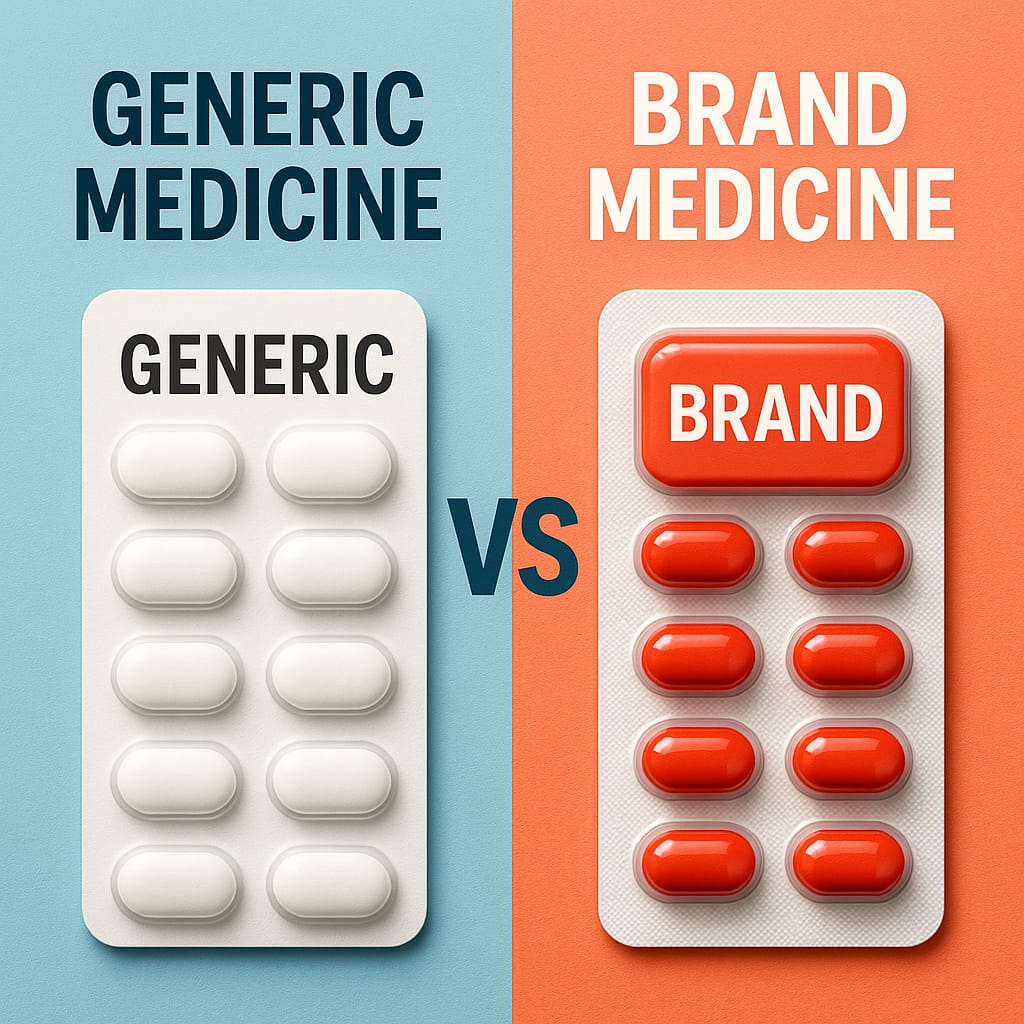
“Would you like the brand-name or the generic version?” is a question that many patients are asked at the pharmacy counter. This often comes with a dilemma, especially when the cost of one is almost double the cost of the other.
Many patients not only wonder if the cheaper generic is as effective as the brand medicine, but often assume that the brand medicine is safer, stronger, and more effective. But is this the case? Let us break it down further.
What is a Brand-Name Medicine?
A brand-name medicine refers to the version of a drug that was developed, patented, and sold under a specific name by the company that discovered it. Common brand names in Kenya include Panadol®, Augmentin®, or Lipitor®.
The company spent decades and billions of dollars on research and development, clinical trials, regulatory approval, and marketing. As a result, the company gets a patent and the exclusive right to manufacture and market the drug for twenty years in order to recoup its investment costs. This is why brand names usually cost more.
What is a Generic Medicine?
Once the patent of the brand-name drug expires, other companies are allowed to manufacture and sell versions of the brand drug, and these are what we call generic drugs. The only differences between brand and generic medicines are usually in packaging, colour, and the inactive ingredients such as dyes and preservatives. These generic drugs work in the body the same way as the original drugs.
Generic drugs must:
Are Generic Medicines as Effective as Brand-Name Medicines?
Yes, generic drugs are just as effective and work in the body the same way as brand-name drugs. They usually undergo a process called bioequivalence testing to prove they are as effective. Since they are subjected to the same quality and safety standards as the branded medicines, they are not any weaker or less safe.
Why Are Brand-Name Medicines More Expensive?
Generics do not bear the research and development costs of the brand-name medicines. After the patent period expires, other companies start producing the drugs, driving the cost downwards due to increased competition. Since they also don’t spend much on marketing, the generics will cost less.
When Might a Brand-Name Be Preferred Over a Generic?
- Narrow therapeutic index drugs, such as thyroid and epilepsy drugs, due to differences in absorption.
- Patient hypersensitivity to certain additives such as dyes and preservatives.
- The doctor’s preference based on specific patient needs.
- The generic isn’t available yet.
How to Decide: Should You Choose Generic or Brand-name?
- Ask your doctor or pharmacist if a generic option is available.
- Compare costs: if both are effective, why spend more?
- Stay consistent and avoid switching brands without guidance if you are on a narrow therapeutic index drug.
Final Dose Of Clarity
Generic drugs are just a safe and effective as the brand-name versions. You can significantly save on healthcare costs without compromising your health by choosing generic medicines. Always talk to your pharmacist to help you make the choice that is best for your health and wallet.
Have questions about your medicines? Contact Dose of Clarity.
Disclaimer: Health information shared here is for education only. Please speak to your doctor or pharmacist before making decisions about your health or medications.
Enjoyed this post? Get more health insights straight to your inbox!