
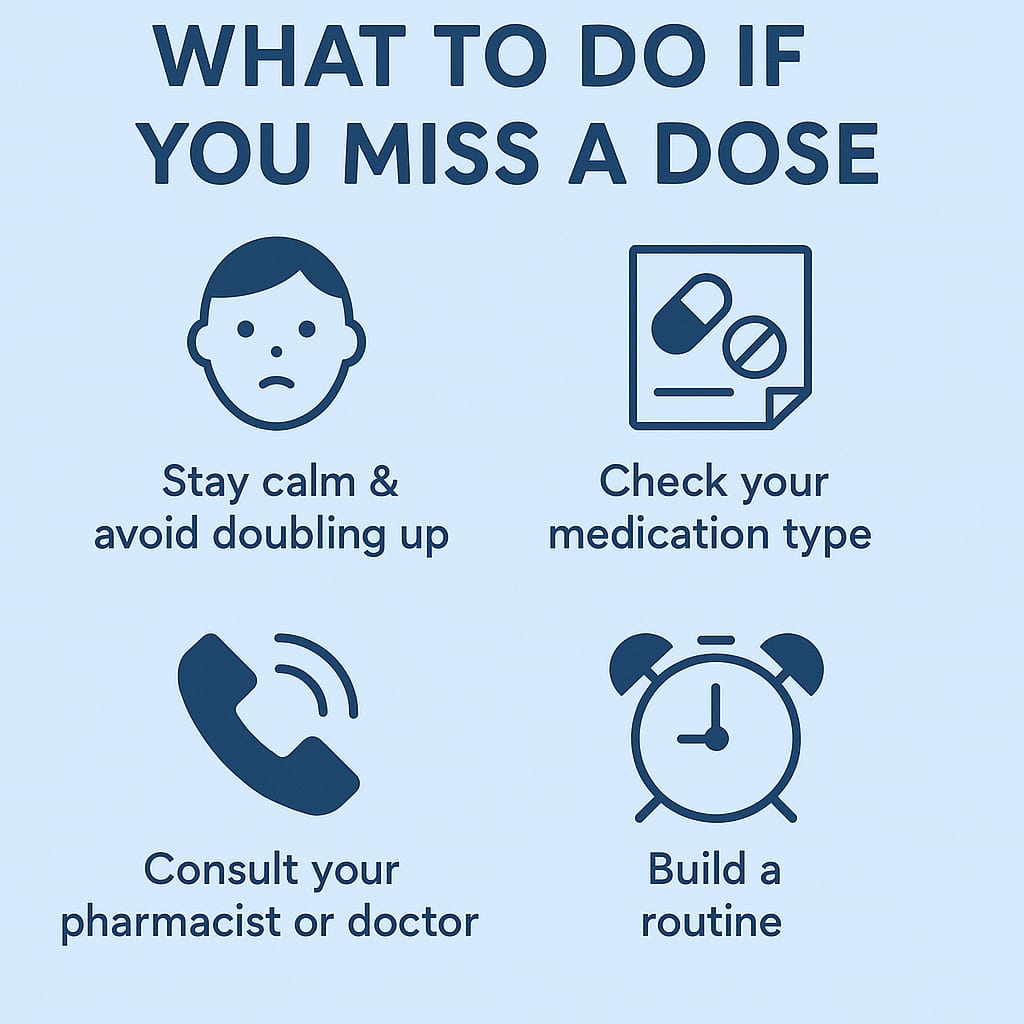
Forgetting to take a dose of prescribed medication can happen to anyone. Whether it’s a daily tablet, an antibiotic, or a supplement, a missed dose can feel stressful, but you should not panic. Stay calm and resist the urge to take an extra dose to compensate because missing one dose is usually not a medical emergency.
The best course of action usually depends on the medicine involved. Some allow you to resume your normal schedule, while others require immediate attention. For example, epilepsy medication should be taken as soon as possible.
Here’s a clear, pharmacist-approved guide to help you handle a missed dose safely:
Check the Patient Information Leaflet (PIL) or Insert
Start by checking the instructions that came with your medicine. Most patient leaflets include guidance on what to do if you miss a dose. This is your first and best resource. Look out for a section of the insert called “missed dose.”
General Rule of Thumb
- If you remember within a few hours (one or two hours within your usual time), take the missed dose as soon as you remember.
- If it’s almost time for your next dose, skip the missed one and continue with your regular schedule. For example, if you take your medication every morning and you remember in the evening, it’s better to skip it and take your usual morning dose the next day.
- Never double up (take two doses at once) unless your doctor or pharmacist has told you it’s safe. Taking two doses at once may result in serious side effects or complications arising from a drug overdose.
Different Medicines, Different Rules
Not all medicines are equal when it comes to missed doses. Different medications have different timelines. Drugs such as antibiotics, hormonal contraceptives, and some psychiatric medications are time sensitive and usually have strict timing requirements.
If possible, know your medicine because a little understanding of the drug can be helpful. For example, is it long-acting? Is it crucial to maintain consistent drug levels in the body? Long-acting drugs stay longer in the body, so missing a dose might not have an immediate significant impact.
Here’s how different medications vary when it comes to missed doses:
- Antibiotics: Try not to miss doses. Take it as soon as you remember and space the next dose appropriately. Inconsistent use may reduce effectiveness or contribute to resistance.
- Contraceptive pills: Missing doses can affect protection. Follow the specific instructions in the leaflet. These vary by the brand and the type of contraceptive. You might need backup protection depending on the type.
- Blood thinners: Missing a dose can be risky. Call your doctor for guidance.
- Blood pressure or diabetes medications, including insulin: Missing doses can impact control. Resume the next scheduled dose and monitor your symptoms like dizziness, nausea, or mood changes.
- Medications with strict timing (like anti-seizure or HIV meds): Call your healthcare provider for specific guidance if you are more than a few hours late.
- Long-acting medications: If you are on a long-acting medication taken weekly or monthly, missing a dose might have different implications. Contact your doctor or pharmacist for guidance.
- “As-needed” medications: If you take medication only when you need it (like pain relievers), simply take it when you realize you need it, unless you’ve recently taken another dose.
Tips to help prevent future missed doses
If forgetting is a common issue, try these tools to help you stay consistent:
- Set phone alarms or reminders.
- Use pill organizers to help track whether you have taken your medication without missing a day.
- Use medication reminder apps (like Medisafe or MyTherapy).
- Ask a loved one to remind you.
- Incorporate your medication into your routine, eg, when brushing your teeth.
- Keep medication in a spot where you will readily see it.
- Keep a medication journal to monitor adherence.
- Refill prescriptions on time. Do not wait until your medicine runs out completely to refill.
When to Call Your Pharmacist or Doctor
Reach out if:
- You miss multiple doses, or you frequently forget doses.
- You are unsure how to adjust your schedule after missing doses.
- You feel unwell after skipping a dose.
- You’re taking a high-risk medication (e.g., warfarin, insulin, anticonvulsants).
Final Dose of Clarity
Missing a dose often happens, but knowing how to respond appropriately can help you stay healthy. Always follow medical advice and use tools to stay on track with your schedule.
When in doubt, reach out to your doctor or pharmacist for personalized advice.
Disclaimer: Health information shared here is for education only. Please speak to your doctor or pharmacist before making decisions about your health or medications.
Enjoyed this post? Get more health insights straight to your inbox!