
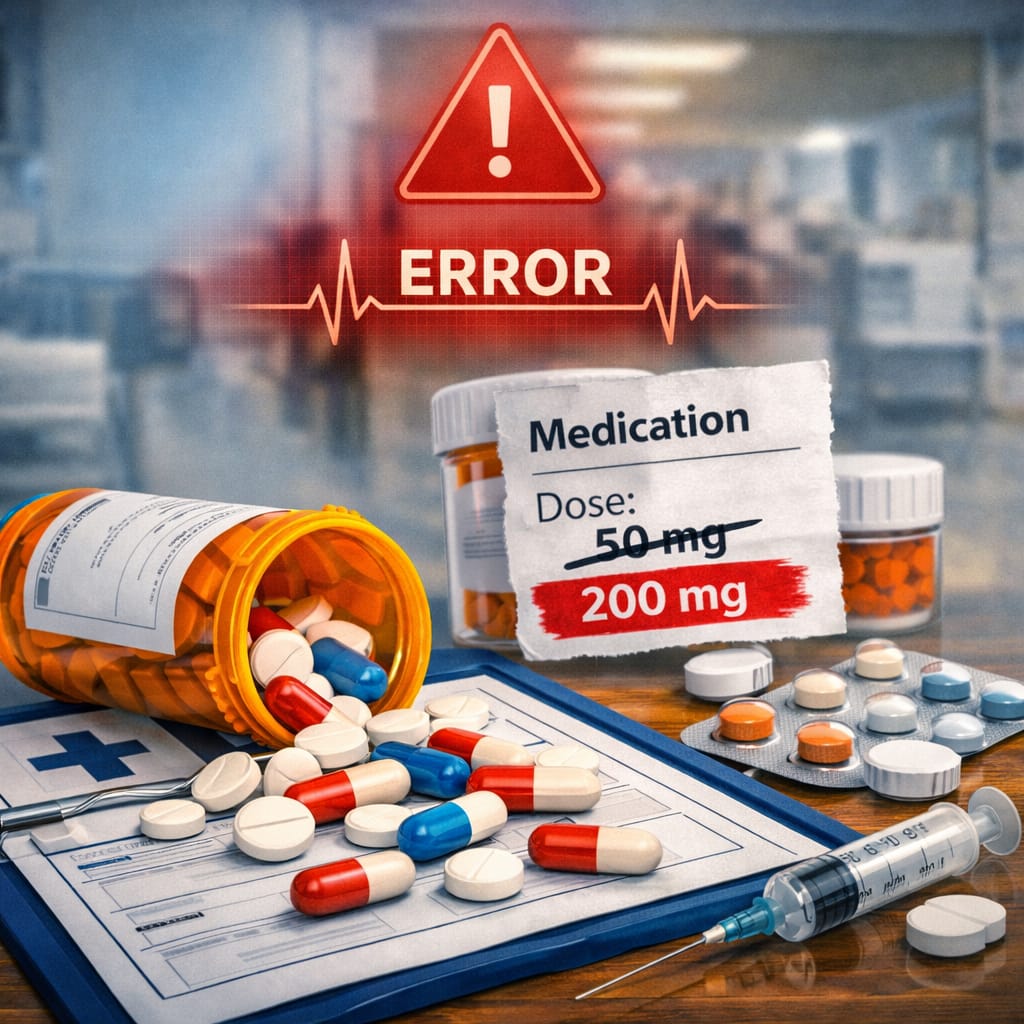
Medication errors arising from missed doses, wrong medication or incorrect instructions can result in serious health consequences. Many medication errors can be prevented by following simple precautions. As pharmacists, one of our main goals is ensuring medications are used correctly in order to prevent harm. While we work to keep you safe, you are still the most important person in charge of your health. In this post, we shall discuss some practical tips to help you ensure that you use your medication safely, correctly and effectively.
1. Always Double-Check Your Prescription
Whenever you pick up a new prescription, always confirm that you have the correct medication name, dosage and instructions. If you have been taking a medication and you realize that something is different, always confirm the same with your pharmacist. For example, if you notice a change in the colour of the medication pack or tablets themselves, it could either be a manufacturer’s change or a medication error. It is good that you ask your pharmacist for clarification. You should always confirm the name on the medication label to ensure the medication is actually yours.
2. Know Your Medication
Many errors happen because patients do not take time to understand why and how to take their medication. You should always ask your pharmacist to clarify anything that is unclear to you. Your pharmacist will help you understand the purpose of the medicine, how it works, the side effects to look out for and what to do if anything goes wrong. If your medicine label reads “take as directed”, ask for the specifics.
Do not be afraid to ask your pharmacist questions like:
• Should I take the medicine with food?
• How many times a day should I take the medicine?
• Are there foods and drinks to be avoided?
• What should I do in case I miss a dose?
Avoid using kitchen spoons to measure your medicine doses. Instead, always use oral syringes and dosing cups provided by your pharmacy to ensure you are measuring your prescribed doses accurately.
3. Keep an Updated Medication List
If you take medications for a chronic condition, having an updated list of all the medications you take including over the counter medicines and supplements is important. Ensure that you note down the names of all the medications, their dosages and frequency. You must always bring this list to your medical appointments. This helps your doctor or pharmacist to identify any interactions or even duplicate therapies.
4. Use One Pharmacy When Possible
Using one pharmacy for all your prescriptions helps to reduce medication errors. This is because your pharmacist is able to track all your medications, check for interactions, identify duplication of therapies and provide proper medication counselling. If you must use a different pharmacy, tell them about any other medications that you are using.
5. Use a Pill Organizer or Reminder System
Missing medications is common especially if you take multiple medications. It is easy to either forget a dose or double dose by mistake when relying on memory. Tools such as pill organizers, alarm reminders, medication charts can help you to keep track of your medication schedule by ensuring you take your medications at the right time. In case of a missed dose, never double up your doses. Follow the instructions provided in the medicine insert or contact your pharmacist for guidance.
6. Be Careful with Look-Alike or Sound-Alike Medicines
Some medications have names that sound almost similar or look similar in appearance. It is easy to confuse similar sounding medication names and tablets that almost look identical, resulting in a medication error. If you are taking several medications, carefully read the medication label and instructions before you take each dose.
7. Store Medications Properly
Improper storage makes medication ineffective and even unsafe. You should never store medicines in the bathroom and kitchen next to heating appliances. You must always follow proper storage instructions on the medicine label or as directed by your pharmacist.
General storage instructions for medicines include:
• Store medications in a cool, dry place away from direct sunlight.
• Store them out of the reach of children and pets.
• Follow refrigeration instructions where needed.
• Always keep the original bottle and do not mix different medicines in one bottle. This makes it easy to identify what you took in case of an emergency.
8. Never Share Medication
A medication prescribed for someone else may not be safe for you even if you have similar conditions. Always consult a healthcare professional before you take any medication. Sharing medications may result in improper treatment, dangerous side effects and even delay a proper diagnosis.
Handling Mistakes (If They Happen)
Here is what to do if you take the wrong medicine or dose by mistake:
- Stay calm
- Call your pharmacist immediately. They can tell you if it is dangerous or not.
- Contact emergency services and seek medical care immediately in case you have trouble breathing, loss of consciousness or you feel unwell.
Final Dose of Clarity
Medication errors can happen at home, in clinics and even hospitals. Checking your medications properly and consulting your pharmacist on anything related to medications ensures you stay safe and healthy. In summary, know your medicines, ask questions, check your labels properly, and always maintain a list of all medicines.
Disclaimer: Health information shared here is for education only. Please speak to your doctor or pharmacist before making decisions about your health or medications.
Enjoyed this post? Get more health insights straight to your inbox!