
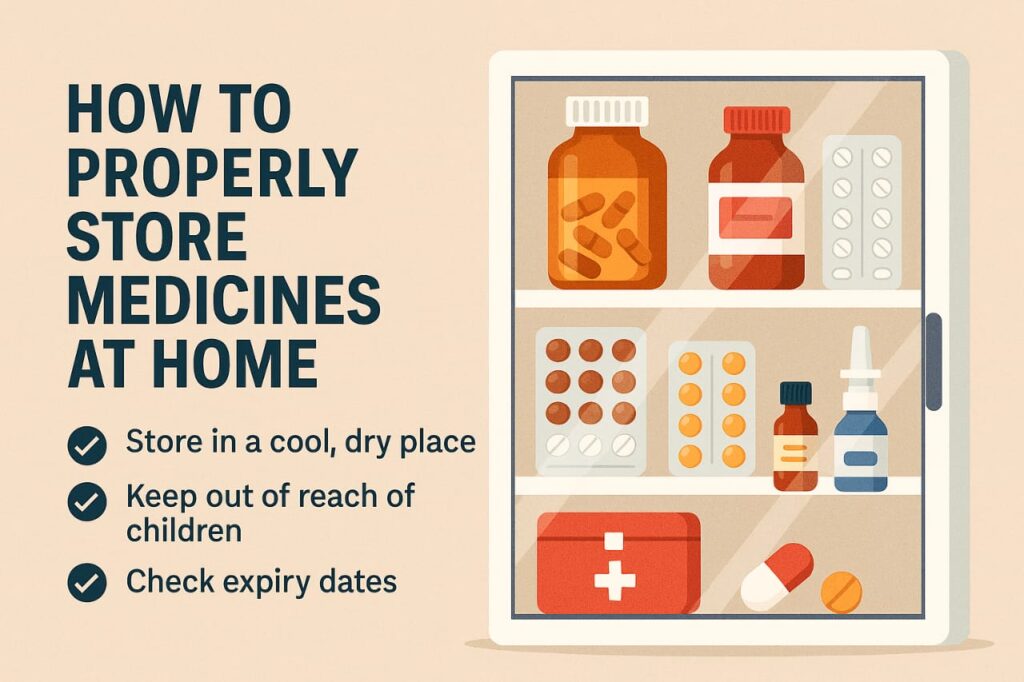
Medicines should always be stored correctly to work effectively. Proper storage is not only about the organization of your medicine cabinet but also about ensuring safety. Failure to store medicines properly can lead to damage, rendering them ineffective.
Storing medicines properly and safely is important for the following reasons:
- To maintain the effectiveness and strength of the medicine.
- To prevent degradation of medicine due to extreme heat, cold, light, or moisture.
- To avoid using damaged or expired medicine.
- To avoid accidental ingestion by children and pets.
General Rules For Storing Medicine At Home
1. Store in a cool, dry place
Most medicines should be stored at room temperature (15 – 25°C), away from windows. A lockable cabinet in a cool part of the house, away from direct sunlight or a bedroom drawer, is the ideal place to keep your medicine. Do not store medicine in the kitchen due to the heat from cooking appliances. Neither should medicine be stored in bathrooms, which can predispose the medicine to moisture. Heat and moisture lead to the degradation of tablets and liquid medicines.
2. Keep medicine out of reach of children and pets
Poisoning from accidental medicine ingestion by children is a common medical emergency. Medicines should never be stored within the reach of children and pets. It is best to store all medicines in a lockable cupboard out of sight and reach of children, even if they come with child-proof containers.
3. Keep medicines in their original containers
It is highly recommended to keep the original medicine container where possible. This is because the container has important information about the medication such as the name of the medicine, how to administer it, storage requirements, and the expiry date. If you are taking multiple medicines, do not mix them in one container, which can lead to confusion and medication errors.
4. Follow the storage instructions on the medicine label
Different medicines have different storage requirements. Most formulations require room temperature conditions (15 – 25°C). These should be kept in a cool, dry place away from direct heat and light.
Some medicines require cold chain storage (2–8°C). These include insulin, vaccines, some anticancer drugs, and some antibiotic syrups after reconstitution. These medicines should be kept in the middle shelves in the main fridge compartment, away from the cooling elements. Do not keep the medicine in the freezer. The fridge door is also not ideal because the temperature in this part of the fridge fluctuates whenever the door is opened. To avoid food contaminating medicines, place your medicine in a dedicated medicine container before you place it in the fridge. If you are travelling with medicines that require refrigeration, use ice packs and an insulated pouch.
5. Keep medicines away from direct sunlight
Light can degrade medicines, especially hormones and medicines that are protein in nature. These should be packaged in amber coloured bottles and stored inside a cool, dark cabinet.
6. Retain silica packs
Some medicines come packaged with silica packs inside the bottles. These help to protect the medicine from moisture, which can degrade the medicine. Do not throw the silica packs away until you have completed using the medicine.
7. Remove cotton balls
If the medicine comes packaged with cotton balls inside the bottle, the cotton ball should be discarded once the container is opened. This is because the cotton might draw moisture into the container and damage the contents.
8. Keep your medicine cabinet organized
Keeping your medications properly organized makes it easier to manage them. If you are on multiple medicines, you can organize them using clear containers based on the timings of the doses or their purpose. Topical medicines should be separately stored from oral medicines. Children’s medicines should also be stored separately from adult medicines. For first aid supplies and emergency medicine, keep them in a separate container for easy access.
9. Carry out regular inspections of your medicine cabinet
It is important to do regular inspections, check expiry dates and declutter the medicine cabinets. You should take inventory of your medicine cabinet quarterly or at least twice a year and discard any expired items. You should also maintain a comprehensive list of all medicines you keep at home, their purpose and expiry dates. This helps you to avoid medicine expiries and replace essential supplies when needed.
Storage Tips for Certain Medication Types
1. Tablets and capsules
Keep tablets and capsules in a tightly closed bottle and away from moisture. If you are using a pill organizer, you should avoid keeping the medicine there for long periods of time.
2. Syrups, solutions and suspensions
It is important to shake the bottle well before measuring each dose, unless instructed otherwise. Liquid medicines are more prone to degradation. Always take note of any change in smell, colour or thickness, which is a sign that the medicine is spoiled. Most liquids expire within a certain timeframe after opening. Always check this with your pharmacist and the medicine label.
3. Ear and eye drops
Most drops expire 28 days after the first opening. You should always check the medicine label or ask your pharmacist. To keep track of the validity of the drop, write the date of opening on the bottle.
4. Injectable medicines
These have strict temperature requirements which must be keenly followed. Discard any medicine if you notice a change in colour, thickness or smell.
Common Storage Mistakes To Avoid
- Storing medicines in the bathroom.
- Leaving medicine in a hot car.
- Keeping expired medicines.
- Using expired medicines.
How To Dispose of Expired Medicines
- Return to the nearest pharmacy for safe disposal.
- Do not dispose of them with household trash
- Do not flush them down the toilet
- Do not pour solutions down the sink
Final Dose Of Clarity
Proper medicine storage ensures that your medicine works the way it is supposed to. If you are not sure how to store it, ask your pharmacist and read the medicine label. If you notice a change in taste, smell or appearance, do not use it. Consult your pharmacist for further guidance.
Disclaimer: Health information shared here is for education only. Please speak to your doctor or pharmacist before making decisions about your health or medications.
Enjoyed this post? Get more health insights straight to your inbox!