
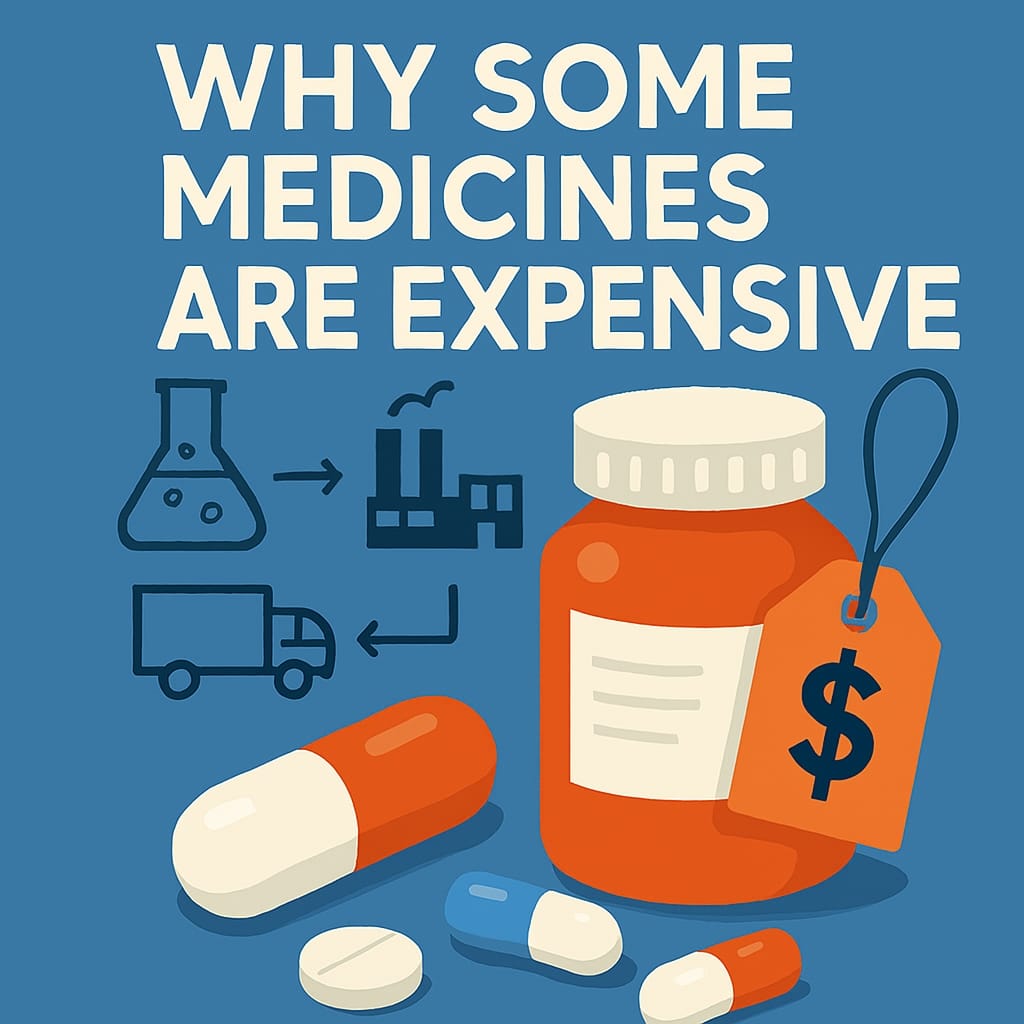
Why are some drugs so expensive while others are relatively affordable? Medicine prices are not only confusing but also controversial. While some argue that high prices are necessary to fuel innovation, some argue that pharmaceutical companies prioritize profit over health, making life-saving treatments out of reach for many who require them.
A lot happens behind the scenes that determines the cost of your prescription. In this post, we will help you understand the various factors that determine what you pay for your prescription.
1. Research and development costs
Medicines undergo many years and even decades of research and development before they finally enter the market. Pharmaceutical companies invest a lot of money in research, clinical trials, and regulatory approvals to ensure that a new medicine is safe and effective. All these costs eventually sum up to the final market price, especially if it is a novel treatment with no other alternatives available. For instance, a newly launched cancer treatment will cost much more than a medicine that has been around for many decades.
Furthermore, only a small percentage of experimental drugs make it through testing to the end, so companies try to recoup costs from the few successful drug candidates.
2. Patent protection
When a company discovers and develops a new treatment, it gets a patent whereby they have the exclusive right to be the only producer for a given period, usually 20 years. This means that the original company controls the price of the medicine since no other company is allowed to produce a generic version yet. Once the patent period expires, other companies are allowed to produce generic versions, leading to a significant price drop.
Patents and market exclusivity are tools that governments use to incentivize companies to take on the massive financial risk of research and development.
3. Manufacturing and storage requirements
Certain medicines have very specific requirements during production, which makes them harder and more expensive to manufacture. These medicines may require complex manufacturing processes, hard-to-source ingredients, and the need for specialized equipment. For instance, vaccines and insulin usually require cold chain storage from the factory all the way to the pharmacy. Other drugs, such as biologics, are made from living cells and hence require complex manufacturing facilities. The form of the medication also dictates the price. Liquids are generally more expensive to manufacture compared to tablets due to a shorter shelf life and a complex production process.
4. Regulatory approval and marketing costs
Getting a drug approved by agencies like the Food and Drug Administration (FDA) requires rigorous testing and compliance. Once approved, companies spend billions of dollars on marketing medicines both to consumers and healthcare providers. These costs will be factored into the final price of the medicine. Smaller markets and novel treatments can even have higher per-unit costs due to small production volumes, adding to the overall expenses.
5. Importation and taxes
In Kenya, a large percentage of medicines are imported due to limited capacity for local manufacturing. The final price you pay for the medicine will therefore include international shipping fees, customs duties and taxes, as well as exchange rate fluctuations. When the Kenyan shilling weakens against major international currencies, the price of imported medicines goes higher.
6. Supply chain mark-ups and disruptions
The journey from the manufacturer to the pharmacy counter has many middlemen, including wholesalers, distributors, insurers, and retailers. Each of these marks up the cost price of drugs to enable them to meet their operational costs, including licensing fees, staff salaries, and storage. In some cases, some regulations limit how high these markups can go, but other times, it is left to the market forces to determine the prices of drugs. Drug prices, therefore, vary by country due to varying healthcare systems and government regulations. In countries where prices are unregulated, medicines often cost more.
Supply chain disruptions create drug shortages, which result in increased demand, hence driving the price upwards. This can happen when there is a manufacturing delay, raw material shortages, or even increased global demand, such as sudden disease outbreaks and seasonal illnesses.
7. Limited competition ( Monopoly pricing)
Drugs that treat rare conditions are referred to as orphan drugs. These categories of drugs have very little or no competition, so they set extremely high prices. If one or two companies are the only ones producing a critical medicine, they tend to keep prices high without fear of being undercut. The research and development cost for orphan drugs is often similar to other drugs. The difference is the size of the market it serves. The size of the patient population that requires these treatments for rare diseases is small; hence, companies must charge a higher price per patient to get a return on their investment.
8. Brand versus generic medicines
Branded medicines, commonly referred to as ‘original’ drugs, usually cost more because their price also includes the development, promotional, and marketing costs of the manufacturer. Generic medicines have the same active pharmaceutical ingredient but cost less because the companies did not incur the research and development costs.
What can be done to lower prescription costs?
Final dose of clarity
Medicine prices are shaped by a mix of science, policy, and business. Understanding how these work will help you plan accordingly. You should never switch or stop treatment without guidance.
Your pharmacist can help you save costs by:
What has been your experience with expensive medications? Share your thoughts in the comments.
Disclaimer: Health information shared here is for education only. Please speak to your doctor or pharmacist before making decisions about your health or medications.
Enjoyed this post? Get more health insights straight to your inbox!