
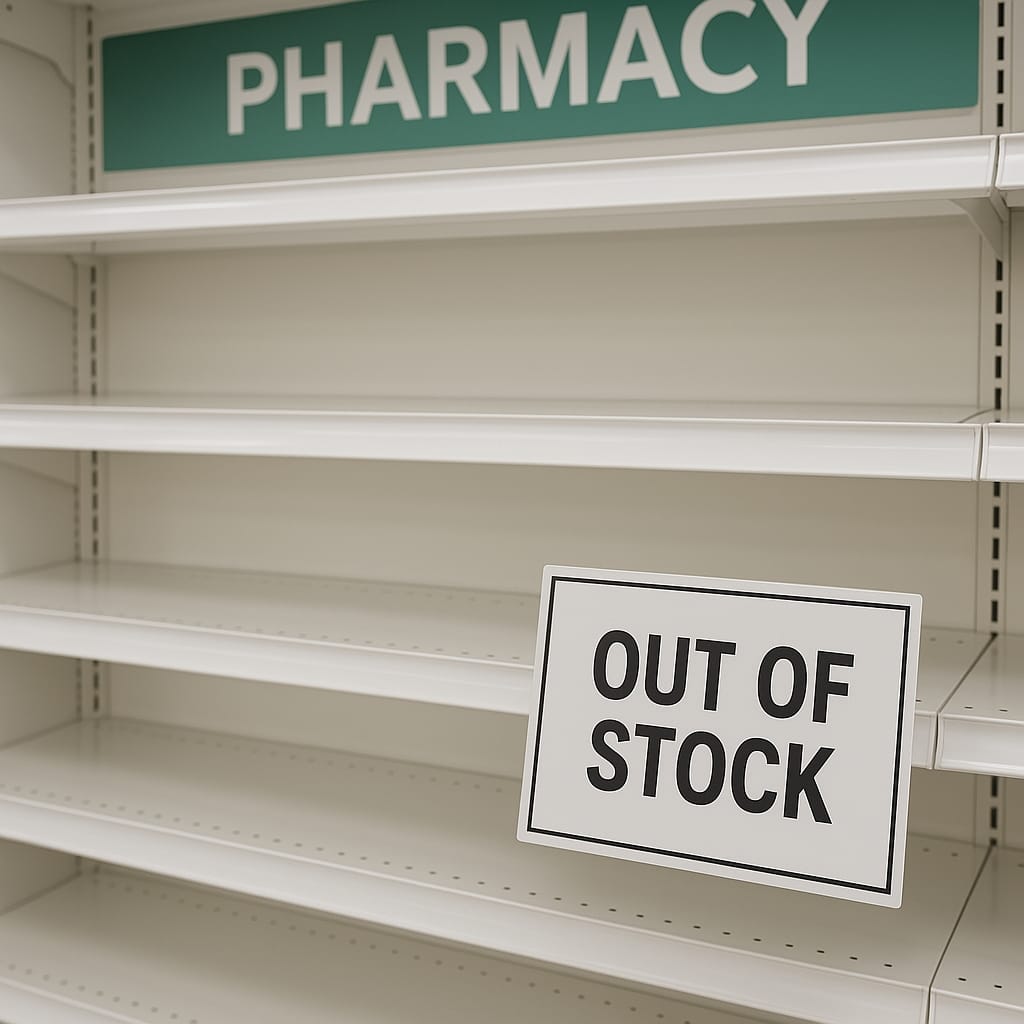
Medicine stockouts are a global public health concern. When health facilities run out of essential medicines, delayed or missed treatment often occurs.
Many patients wonder why medicines go out of stock from time to time. This is usually a result of a complex and fragile health supply chain that involves numerous parties from manufacturers to the pharmacy counter. In Kenya, many medicines are sourced from manufacturers abroad. When these manufacturers face raw material shortages, price hikes, and other production issues, drug shortages are likely to occur locally.
In this article, we shall unpack why medicine stockouts happen, especially in Kenya
1. Supply Chain Disruptions and Manufacturing Issues
- Manufacturing problems: Quality control failures, outdated equipment, and lack of trained personnel may cause a manufacturing plant to close down temporarily to correct the issue. This disrupts the entire supply chain, causing drug shortages.
- Raw material shortages: Unfortunately, the globalized supply chain is such that a single region is the sole producer of critical raw materials for drugs. When problems arise in the sourcing of Active Pharmaceutical Ingredients (APIs), manufacturing of the end product is greatly impacted.
- Concentrated production: There are usually a limited number of manufacturers for particular drugs. When these producers face an issue in production, a widespread shortage will occur.
- Logistics challenges: Medicines usually pass through a chain of many hands, including manufacturers, distributors, wholesalers, health facilities, among others, before they get to a patient. When disruptions such as transport hiccups, delays in port and customs clearance happen in any part of this chain, it significantly affects drug availability
2. Inefficient management and distribution
- Poor Forecasting and Planning: Drug shortages can occur when the demand is underestimated, for instance, if more patients require a drug than was expected or if there is an outbreak that increases the demand. This happens especially where the data used to estimate demand is not accurate or if ordering is not done in good time.
- Procurement Delays: Lengthy and bureaucratic tendering and procurement processes, supplier disagreements, and paperwork bottlenecks significantly slow the process of procuring drugs in most health facilities.
- Logistical Challenges in Remote Areas: Medicines may be available centrally, but getting them to far-flung areas may prove difficult due to poor road networks, unreliable transport, and insecurity, hence affecting the availability of medications in rural health facilities.
3. Financial and economic challenges
- Budget Constraints: Many government facilities rely on donor funds or the government to stock drugs. When funds are not sufficient or are disbursed late, most facilities will procure drugs based on the limited funds available.
- Unfavorable pricing: Some cost containment measures, such as mandatory price reductions, often discourage manufacturers from producing certain drugs. Companies stop manufacturing a drug if the price is too low to cover the cost of producing it, hence creating a shortage.
4. Human and external factors
- Lack of skilled personnel: A shortage of trained personnel, such as pharmacists and supply chain managers, leads to poor inventory control and administrative errors that lead to stockouts.
- Inaccurate demand forecasting: Estimating how much of a drug will be needed for a particular period is not an easy task. Failure to accurately project a consistent demand will lead to under-ordering and stockouts. Unexpected spikes in demand can also lead to stock being depleted faster, for instance, during sudden disease outbreaks and seasonal illnesses.
- Stock Mismanagement or Theft: Poor inventory practices and pilferage, in some cases, lead to medication stockouts in health facilities. When medicines are not properly managed, they may not be accounted for, resulting in theft and drug expirations.
- Public health emergencies: Pandemics, natural disasters, and geopolitical conflicts lead to supply chain disruptions. Manufacturing sites can be damaged, and transport routes closed. This causes a sudden increase in demand for certain drugs.
5. Regulatory and policy issues
Stringent regulations and slow approval processes can delay the availability of drugs. Furthermore, inconsistent drug policies across regions create supply imbalances.
The consequences of empty shelves
- Treatment interruptions may lead to worsening of a patient’s condition, increased hospital visits, and long-term complications.
- Increased risk of drug resistance due to inconsistent supply, which allows pathogens to thrive, eg in HIV and TB.
- Use of less effective treatments, which may have unintended side effects.
- Use of more expensive alternative treatments, which drives high out-of-pocket expenditures.
- Emotional toll on patients due to anxiety, fear, and frustration, especially for patients ailing from chronic conditions.
- Erosion of public trust in the healthcare system.
- Increased workload for doctors and pharmacists due to time spent looking for alternatives.
- Higher operational costs for health systems due to emergency procurement of expensive alternative treatments.
- Reduced efficiency because stockouts disrupt workflow and service delivery.
What Can Be Done?
Practical steps for patients and caregivers
Final Dose of Clarity
Medicine stockouts are usually a sign of underlying health system challenges. With proper planning, investment, and accountability practices, these can be reduced. By understanding the root causes of this problem, we can work towards a future where every patient has access to quality, safe, effective, and affordable life-saving treatment that they require.
Disclaimer: Health information shared here is for education only. Please speak to your doctor or pharmacist before making decisions about your health or medications.
Enjoyed this post? Get more health insights straight to your inbox!